
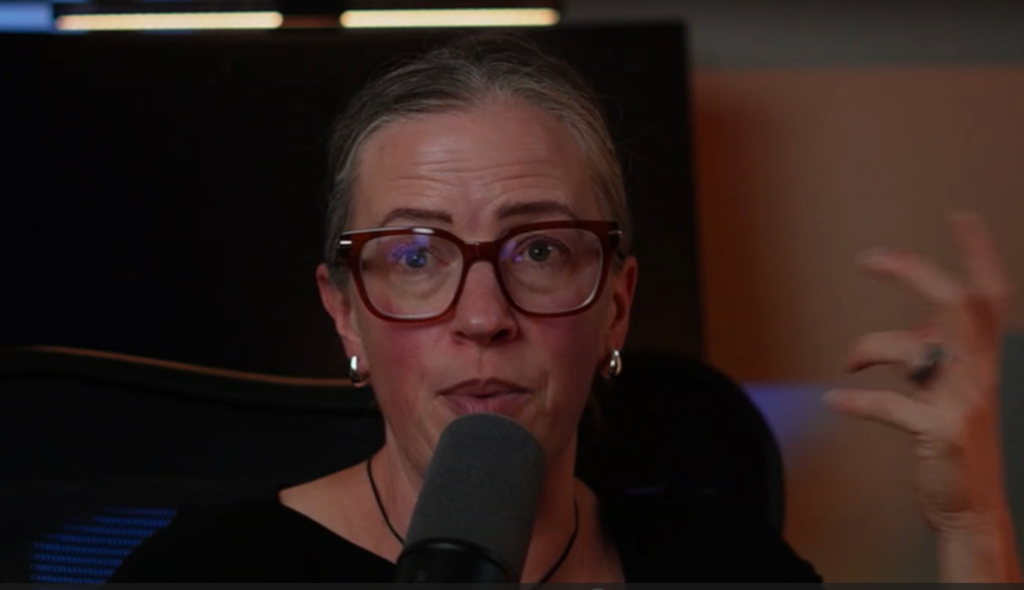
Welcome to Legacy to Liquidity, a business exit podcast for owners thinking about what comes next. In this episode, hosts Angie Scheribel and Isaac Garcia-Scheribel break down the eight most common — and most costly — mistakes owners make when it’s time to sell.
In this episode:
- The preparation most owners skip, and what it costs them
- Pricing and valuation mistakes that scare off buyers
- How poor timing and poor records can derail a deal
New episodes drop regularly with real conversations about selling, transitioning, and building a business worth exiting well.
Read the full transcript
Angie Scheribel & Isaac Garcia-Scheribel: All right, well, welcome back to Legacy to Liquidity. I’m Angie Scheribel, and I help mission-driven business owners sell their business with confidence, ensuring their mission lives on while they gain the freedom to create their next era of impact. And you are Isaac, the son. and producer. And producer. And the comedy. And in this podcast, we talk about all things that business owners should be caring about.
if they ever plan on exiting their business. And I don’t mean just like boring business stuff, but stuff that actually matters. So I believe that healthy humans run healthy businesses that lead to healthy exits. And all three of those things are codependent with each other. So we’ll talk about all those. But on today’s episode, what we’re gonna talk about is
The I don’t even, what’s my number? I don’t know. No, you’d think I would have put that near the top, but I didn’t. Right. The eight biggest mistakes. What not to do when it comes to selling your business. All right, let’s do it. All right, let’s do it. So, number one, and I actually mentioned this a little bit in our last episode, but number one mistake: waiting too long to sell. Okay. Yeah. So
You want to sell your business on an upslope, right? Buyers look at a business and they want to see growth. When you look at the last three years, which is what we go to market with, the last three years of of I lost my train of thought because I touched that microphone. So professional. When we go to market with the last three years of financials, you want to see three years ago a good number, and then you want to see
That two years ago a little bit better, and you want to see last year a little bit better than that. And you want to see it that trend continuing on to the current year, right? So you want to sell your business on an upslope that makes a buyer excited. and you want to sell when you have energy. You want to sell when you care about your business, right? So nobody wants to invest in a business that’s on the decline. Duh. Yeah. Like, come on. So the longer you take your foot off the gas, the less your business is worse.
Interesting. Okay. I feel yeah, that makes sense. I mean, I I feel like if you’re selling a business on the decline, it’s like, all right, s now this buyer has to come in, they’re like, man, I have to pick up all this slack that you just left around now. Yeah, and it’s just not attractive. Like you you might find the buyer who is like, Okay, well I see all the ways I can turn that around and I’m motivated. So I’m gonna get in there and I’m gonna buy it and I’m gonna do it. But
That business isn’t that business isn’t worth nearly as much as one that’s growing, right? So yeah, yeah, you can sell it. It’s not that we can’t find you a buyer. I feel like that is worth a fraction of what it would be. Yeah. I feel like the other thing too is like if you’re if you’re looking to sell your business and then say you w you want a a price point and but it’s on the decline though, I feel like o you can automatically like as a buyer come in and be like, Well, if your business is declining, like you know, I don’t I don’t have to meet this number anymore, clearly. Like, you know, what are we talking about here?
Yeah. So it’s not that it can’t be sold if it’s declining. It’s just that it’s worth a lot less. Yeah. Right? Exactly. That’s that’s mistake number one, is waiting too long to sell. Mistake number two is no forethought or planning into selling your business. The truth is we touched on this in the last episode as well. So you remember the statistic how many
The percentage of businesses that actually sell in the United States. Thirteen. Yes. come on. I’m looking I’m learning. I’m learning. So thirteen percent of businesses actually sell, but I can tell you with a hundred percent certainty certainty when I know a business will sell. So that’s a bar. You didn’t quote that. That was tough. Well, you’re gonna be the one that clips all this for the Yeah, that’s true. That’s true.
So the gap is in the preparing, right? So again, we run into business owners who’ve just been running their business and it’s fine. It’s been making the money that they need it to make. They’re, you know, they’re paying their bills, whatever. It’s it it is what it is. And then something happens, right? They their spouse dies and no longer do they want to have anything to do with it or whatever, right? Right. they go through a divorce and in a divorce.
All assets have to be divided. So now they have to sell. They have to pay their spouse half. Yeah. And so they and they haven’t prepared, right? They have not prepared their business to function without them. And so that is that’s the difference. If you put forethought into it, if you do the things that make a business sellable and transferable, I can sell your business. We could sell your business. Right. But, you know, if there’s no forethought or planning into it, it’s basically you just are like, okay, right now, like we throw it out there and
You get what you get. You’re winging it. And you don’t throw a fit. Right, come on. That’s a bar. Quote that. I did many times when you were young. I was a great kid. I don’t know what you’re talking about, but sure. Tell lies to the people, I guess. I mean, I think so there there’s actually this some business owners that I speaking to recently. There is they’re a couple and they have just
they just ran out of gas, right? Like they’re totally burnt out on their business and like we have got to sell. Damn. And what their business is worth is about half of what they would like it to be worth, maybe sixty percent. Ouch. Yeah. It’s an ouch. And so then I got them in a room with some consultants who do like exit strategy and kind of growth and scaling. Yeah.
And like, okay, here’s the things that you can do to get your business to grow it, to get it to that place, that number that you want. Right, right. And they like did this sort of mental inventory and were like, yeah, no. Like we ain’t got it in us, right? Damn. Yeah. Do you that sucks. Like I kind of hate hearing that. We’re taking it to market at that lower price. That’s what the business is worth. And so it’s more of that like.
I I guess that goes back more to that number one of waiting too long to sell. Like you want to sell it when you’ve got energy and you’re pumped about it and you’re growing it and you can show that. Yeah, yeah, yeah. because you don’t want to just all of a sudden have to sell it and take whatever right. The crumb’s left over. Yeah, exactly. So so and we talked about, you know, the the things that normally make you have to sell death.
divorce, disease, disability, disenchantment, right? They’re called the five D’s. Bam. And so like not fun to talk about, but like you’re you will exit your business. Yeah. Right. You will. And so putting some forethought into making your business sellable and transferable goes a really long way. So not putting that forethought is a mistake number two. Okay. Mistake number three is owner
Dependency. So when you start a business, it makes total sense that the business, like it is you, right? So you started it, you’re the one putting in whatever, forty, sixty, eighty hours a week to get this thing off the ground. That’s the way it should be. You’re the engine, basically. Yeah. Yeah. But in at some point, you have to, and hopefully sooner rather than later, the sooner you can make the switch.
the better off your business will be. You need to allow the business to run pieces of it. You need to give away pieces of it, right? It needs to not be fully dependent on you. So processes and hiring people and this can be something that is difficult for business owners, right? They can be a a business is their baby, right? When you have your business, your business is your baby. It feels like part of your identity.
And so it can be really difficult to not try to do it all yourself. But that’s not a healthy business. Come on. Right. Yeah. And so there it is it’s the analogy I like to make is it’s like parenting, right? So when you have a young child, as the parent, you’re very involved, right? They cannot literally survive without you. Yeah. So you’re there for every moment, you’re taking care of everything.
As they get a little bit older, they get to gain a little bit of independence. So they can feed themselves. They can whatever, right? Right, right. and then by the time that they’re teenagers, really, you should be at a place where you’re allowing them to make decisions, to do things on their own so that they can try and fail when they’re under your roof, right? Because the idea, the point is if you’ve parented well.
is to get them to launch, right? You want them to go out and be their own successful adult, their own successful human. And if they’re too much dependent on you as a parent, then realistically you haven’t done your job well. And so the same is true in a business. Like yes, when it’s young, it is your baby. You do have to be fully, you know, in all of the pieces. But
As the business grows, it needs to begin to have more independence. So you are, you know, putting in like systems and processes in order to make sure that the business can like, you know, has methods of doing things that don’t just depend on like you saying what needs to happen. Right. Yeah. And then you get you get management who are aligned with what you’re trying to do, right? And and then, you know, by the time your business is a teenager, that management should be able to
know what kinds of decisions they have the authority to make without you. And they make decisions that are good for the business, right? Right. And they’re incentivized in a way that aligns so that that decision is good for them as well. Right. So so that when you get to that place of launching, right? When the by the time your business is ready to be a full blown adult in this analogy and you’re ready to sell it, that business can run without you. You know that that business can go on to another owner and it can be
fully independent of you and successful, right? and that can be difficult when the business is your baby. I was about to say I feel like there’s a lot of ego tied in that, but yeah. So that’s part of the process. That’s part of the work that has to be done though, in order to make a healthy business. Right. because if you are the business, then the business isn’t transferable. It doesn’t function without you. Right. And so that business is worth a
lot less money and there’s gonna be a lot of like terms and earnouts and things attached to it in order to even try to sell it at all. Yeah. But I can tell you from we sell a lot of businesses where I work and anything that says owner absentee, anything that is does not need the business owner to actually function, it sells quick and it sells for top dollar. Right? Yeah, that makes sense. Mistake number three, owner dependency. So what have we got? We’ve got
Yeah, we’ll go back over that piece at the end. I don’t know what we’ve got so far. All right. Mistake number four. There we go. unrealistic value expectation. So ignorance is not bliss. Right, right, right. That makes sense. So there’s this gentleman I met here. He had this, he was telling me a story of his business. he didn’t have it here in the state of Colorado, but he lived out of state.
And he built this cool restaurant. it was really popular, like really well known, had a reputation. you know, the name was something that had become known and he sort of like expanded it. He had food trucks and sort of catering. And so had grown it in this way where it was like really well known, had grown his revenue to I want to say he said like 10 million. and then he it was time for them to move out of state, and he goes to find out.
He went to go to sell it and talks to somebody who sells businesses and finds he’s Yeah, it should be worth like, I don’t know, 10 million. I’m doing 10 million. Yeah. And comes to find out that his business like his revenue has nothing to do with his value. Like that’s not what people are looking for. And so what it was actually worth was nothing close to what he thought it was worth. It’s not about the revenue, it’s about the profit. And so
Had he known that ahead of time, would he have built it differently? Right? Like would he have added on a food truck with like a big investment or, you know, all of these things that like maybe he would have you who knows what he could have done differently in order to not necessarily stress about the revenue, but how do I focus on growing the profit, right? So Are you shoeing the cat? No, there’s a like a bug right here, and I was just like I was like, he’s not really in your way. But you you too sold, go. so
You know, and then like there is another I’ve got another example of right, somebody I spoke to who he bought his business, I don’t know, thirteen years ago or something like that. And we had a conversation that he’s ready to sell. He wanted to sell it for three times what w it was worth, right? So yeah. Three times. Right. So I’m like going through his financials and and doing the, you know, the figuring out what his business is worth and have to come back to him and just be like, Okay, well
realistically what I can get for you is this number, not this number. Where do you even get that number? You just pull it out of his ass or like Well, yeah. I mean, quite honestly, like business owners, when you don’t know how to put a value or a price on a business, you’re just like, you know, this is twelve years of my time. This is what I deem it’s worth. So in order for it to be worth my time, I need this. Or maybe it’s based on like how much debt they have. They’re like this is what I need for it, right? And so if you’re
ignorant if you don’t understand how to put a price on a business, you just think it’s worth what you need or you know right you know, commissary to your what’s that’s not the right word, but in line with your effort. There you go. Right. Right. and so yeah. and that means that we could, you know, we could take it to market.
at that unrealistic price. And you can be pissed off. And it can sit there for a really long time. Right. And buyers are not going to buy it because buyers are pretty educated. And so then we’re just going to have to lower it later, right? Or you’re just not going to sell. So Yeah. sounds like a lose lose right there. Yeah. If you have unrealistic expectations about what your business is worth, then you’re not going to want to sell it. Or it’s not going to sell. But that’s what you’re trying to sell it at, right? Yeah. That makes sense.
Buyers do not overpay, especially in the age of AI. Mmm, come on now. Pretty educated. Right. AI, man. Damn, not killing these businesses. wait, no, it’s creating businesses. I forgot, but still. Come on. all right. Mistake number five. Not putting yourself in the shoes of the buyer. So buyers are not really buying.
your effort. They are not really buying your n name or your brand. What buyers are buying is future earnings. They’re buying themselves cash flow. Right. Right. Right. That’s why they buy a business. Yeah. News Flash, they don’t give a shit about you. Right. Yeah. It’s like, I’m sorry you put twelve years into this and it’s worth a third of what you want. Right. I don’t give a shit.
I’m here to make some cash, bro. Come on. Damn, yeah. News flash, people don’t like you or care about you, right? they hate you. They hate your guts. If you’re watching this, they hate you, I promise. But the other thing too, like you put yourself in the shoes of a buyer and they own usually. Usu like if it’s not a cash purchase. Mm-hmm. Which
Most often it’s not. The buyer owns a fundamentally different business than the seller because a buyer has debt. So if you have a million dollars in profit, right? When a buyer buys that, a good chunk of that profit is going to service the debt, the loan that they took to buy the business. Right. So it’s a fundamentally different business. And so it just
You know, you have to understand the financials for them. And think about it from their point of view, right? From a buyer is they’re taking on a lot of risk. Now, you as an owner, or if you’re especially if you’re a founder, yes, you took on risk. You took on the risk of not being able to pay your own bills the first couple of years, whatever, right? Like, yes, you took on risk. But this buyer is taking a risk that
they’re going to be able to pay the debt that they just took on. Right. If they don’t, then, you know, their house is probably being taken out from underneath them. I was gonna say this also ties back to one of your previous points too, where having pre established things in place allows there to be less risk for the buyer. That’s a thing, right? So it’s like so it’s like if if I mean that’s the that’s the it makes it more attractive to the buyer when there is the least amount of risk as possible. So if you’re buying a business with more systems in place, that makes sense that like
this has way less risk than this business comparatively. So then it’s just like, I’m gonna go with this one because yeah, I’m taking on more debt, but this one has systems in place to where I’m immediately able to see benefits from this one compared to this business that doesn’t have shit in place. Yes. So I that yeah, that makes a ton of sense. That’s exactly right. Yeah. That’s exactly right. Because they’re they’re ri they’re trusting that they’re gonna continue to be able to get the business that you did that you’re
Employees are going to continue to work for them. Right. Right. It’s a lot of risk for them. So the more you can set up for them, you more you can be like, well, this sales of this business are, you know, for instance, have nothing to do with me. Right. There’s I have a sales manager and a sales system and sales people who are motivated, being motivated, and you know, all those things. And they’re like, okay, well, then the owner being here doesn’t matter at all. That makes that piece less risk. Right, right. More attractive. Yeah. Absolutely. That’s exactly right. Having those things put in place. And the more
risky the business is, then the more there will be unfavorable terms for the seller when they’re going to sell, right? Like there will be things like an earno. Like I will buy your business and pay you this much if your business meets, you know, X and Y and Z goals or whatever, right? Yeah. yeah. Okay. Risk number six. Risk. Not risky.
Mistake number six. We got that wrong. Mistaking risk number six. mistake six, yeah. All right. Mistake number six. DIY your exit. Again, how many businesses sell, Isaac? What percentage? Thirteen. Yes. Only 13% of businesses sell. Damn. when you go to sell your business and when you go to buy a business, it is an emotional experience. It is like.
Going back to my favorite analogy, sending your kid off to college. Right? Right. Right so my baby’s all grown up. Yeah. It’s emotional. And when you’re negotiating and you’re talking things like, you know, the price, and perhaps they there’s something that’s found out that makes that price go down from an initial offer. That is all very emotional. And it is real easy to just blow that up and walk away and not.
Sell your business if it’s just you seller talking to Mr. Buyer. Right. When you have somebody like myself in the middle, we get to be the middleman. We get to be the bad guy. Right. So you get to blame us. We can disseminate information at in the right timing when you’re in the right mood, when right, like
You’re kind of like so you’re you’re the emotional punching bag. Awesome. Yeah, yeah. And kind of like a therapist, right? Like your exit therapist. Yeah, yeah, yeah. Okay. So somebody that does this helps actually navigate two parties trying to come to an agreement and not blowing it up. Mm-hmm. And the truth is that there’s like there’s even this playbook by private equity. Private equity comes into businesses and they’re like give this really sexy offer on the
On the front end, like I’ll pay you twenty million dollars for your business. And then they go into this due diligence process and they have a playbook of like literally wearing you down, like on your thirtieth wedding anniversary that they know about it, because you mentioned it in a call earlier, they’re gonna be like, I need this financial information right now. And they’re like drawing it out and they’re literally wearing Dighead. Damn. It’s successful.
But not very nice. so they literally have a playbook whereby they are wearing you down to then by the time you get to the end, you’re like, All right, my business isn’t worth nothing. And they’ve dragged it out so long and just want to be done with it. And you don’t know any freaking better. Right. Like you want to have somebody representing you to them that knows the game, that can kick them to the curb, that can be like, no, you’re not.
You may absolutely not talk to my client today. He is out or you know, whatever. So blocked by James. Sorry. so you want somebody looking out for you and that’s, you know, knowing, I brought in here that like you don’t know as a business owner, you don’t know what’s normal, like what industry standard is and what’s not. So somebody might come in with an offer and you’re like
Sounds good to me. And it might be like so far off of like what is normal or standard or you know, and you have no idea. You don’t do this. Right, right. So just even having somebody who does this for a living, like who knows the game. Right. Is really valuable. Yeah. no, that’s way off. We’re not even gonna consider that. Let’s talk to this other buyer, right? Right. so I mean, your business is usually your biggest asset. Why would you not like
Treat it with care. Right. Right. It’s like are you gonna DIY your surgery? Hell no. Right? Get somebody that knows what they’re doing. Right. Yeah. Get a professional involved. Yeah, it’s a pretty big deal. That makes sense. Okay, number seven.
After I drink. mistake number some, but whoa, mistake number seven. Not doing the proper financial planning. So I’ve seen it many a times. We’ve all seen it in office many times, where like a lack of financial preparation and knowledge totally kills a deal. So you’re selling a business for five million dollars and after paying off.
your taxes and the fees and I don’t know what your debts you’re walking away with seven hundred thousand dollars. Ouch. Yeah. And you’re like, no. Right. Never mind. I don’t really sell my business. Right. Right. Right. So but if you plan it ahead of time, then you can number one, you can have like strategies for taxes.
There’s ways to like lessen your tax burden at exit if you’re planning further enough, far enough ahead of time. And also not being surprised by what the tax burden is actually going to be allows you to look at an offer and have a realistic expectation of what that means for you. Right. Yeah. and know then, I mean, the other piece of like that that proper like personal financial planning planning is knowing, okay, so this is what I walk away with.
If I invest that, does that take care of my family and I? Or does that take care of the next four generations, which is my goal? Or ready? Like what do I do with that that capital so that we are taken care of? And if you’re having those conversations years out, then you know what that number is you need to hit. Right. So that you can accomplish those goals. That makes sense.
But if you don’t do that proper planning, then one, you’re surprised at what your actual walkaway amount is. And two, it’s, you know, it’s usually it’s not just like coincidentally enough. Like make some proper planning. Right, right. Yeah, yeah, yeah. Two. Okay. That makes sense. All right. Last but not least, the eighth mistake is not having a post exit vision. So going back to that
My favorite analogy of like, let’s say you’re an empty nester now, right? Like, do you fall into this depression of like, what do I even do with myself? My whole life has revolved around my kids. And now I’ve got nobody at home. Right. Right? Like your identity is different. You’re like, what is your what’s your purpose anymore? Like, what are you even doing with yourself in your time? Yeah, yeah, yeah. Right? Like you’ve got all of this free time. And so it could be a very
Depressing thing to sell your business. Overwhelming, yeah. If you’re not tapping into like the vision of what’s happening beyond it, right? So if you’ve got this purpose and this vision of like what you’re going to do, how you’re going to spend your time, the causes you’re going to contribute to, and the trip you’re going to take once a year with your extended family and or whatever, right? Like,
The pat the things that you’re passionate about that you haven’t been able to focus on, that now you’re gonna have the time to focus on. That is what makes a like happy exit, a healthy exit. Right. So knowing what there is beyond the business deal, right? And having a plan, even like so much as like a schedule, perhaps, right? Like maybe you need to be like, okay.
Every Tuesday and Thursday I’m playing pickleball with the girls or right. Like whatever it is, like you’re planning and have got an idea of what it is you’re doing and focusing on so that you’re not just sort of like falling off this like cliff cliff of purpose. Right. Right. It’s it’s it’s life after it’s life after the fact. Yeah. Yeah. Exactly. And there’s a really good example of Tony Shea. he’s the guy that sold Zappos to Amazon for like one point two billion dollars. Damn. Jeez, okay.
my god. And there is reason to believe that he he was like highly depressed afterwards. One point two billion dollars. I mean, that is excuse my language, that is f you money, dude. Like that is a hundred percent. I mean, what do you even like how old is he when he when he did that, when that went through? That’s a good question. You can look that up. But he the what’s his name? Tony, I think you say it’s Shay, it’s spelled funky.
Let’s see. CEO of Zappos, H S I E H. But the point is, like, there’s no amount of money that can actually bring you like purpose and fulfillment. Like it has to you have to have something more than that. This guy? Yeah. Yeah. He died in twenty twenty. Yeah, he died in
Which is like a tragic thing, but people like the people close to him were like, he was off, he was he was struggling, he was depressed, he was he wasn’t doing well. Born in 73. So he was he was young. Yeah. Wow. He was real young. Yeah. 46. So there’s like there’s no amount of money that just makes you happy. Like he actually went after he sold zappos. He went and invested in like creating a community. I want to say in like Las Vegas or something like that, developed.
Something like that. So he even went beyond to be like, let me create meaning and purpose here. So like he was pursuing that, but even still struggled with it. So post exit vision is necessary to have a healthy, no healthy exit. For sure. All right. So that’s all of our mistakes. The top eight mistakes again. waiting too long to sell, no forethought or planning, owner dependency.
Unrealistic value expectations, not putting yourself in the shoes of the buyer, DIYing your exit, not doing the proper personal financial planning, and then not having a post exit vision. All right, so that’s all we got for today. Sounds good. We wrapping it up then? That’s it. Get ready for the blooper reel at the end, y’all.